Found Orphaned or Injured Wildlife
Need Help Now?
Flagler Animal Services at Flagler Humane Society 📞 (386) 246-8612 | 7 days a week, 8 AM – 5 PM 📍 1 Shelter Drive, Palm Coast, FL 32137
Our Officers: Officer Katie Share | Officer Hailey Jankowski Dispatcher: Maryann Michaels — mmichaels@flaglerhumanesociety.org
After-hours wildlife emergencies: Flagler County Sheriff’s Department: (386) 313-4911
Does This Animal Need Help?
Your instinct to help is a good one — but not every animal you find outside is in trouble. Many baby animals are left alone for hours at a time while their parents search for food. Stepping in too soon can do more harm than good.
These are signs an animal does need your help:
- The animal was brought to you by a cat or dog
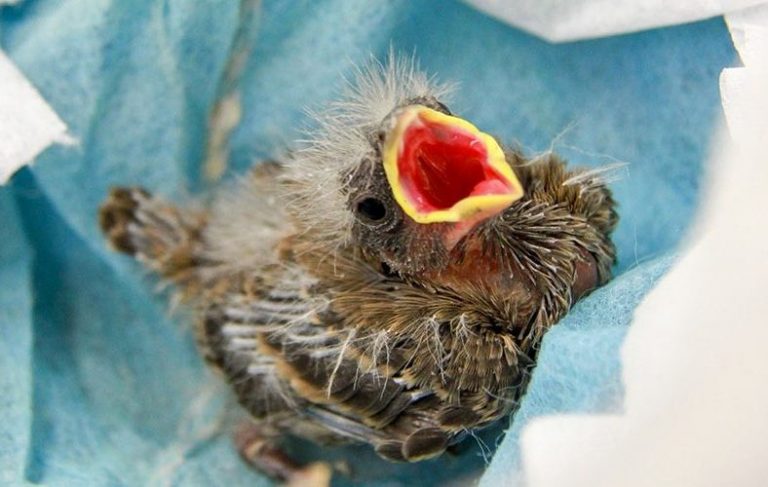
- A bird is featherless or nearly featherless and on the ground
- The animal is shivering
- There is a dead parent nearby
- The animal is crying and wandering all day
- There is an obvious broken limb, bleeding, or visible asymmetry (one wing lower than the other, cloudy eye, etc.)
If you see any of these signs, call us at (386) 246-8612.
What To Do While You Wait for Help
Once you’ve called and help is on the way, here’s how to keep the animal calm and safe:
- Place the animal in a cardboard box lined with a soft cloth (an old t-shirt works well). Punch air holes from the inside out before placing the animal inside.
- Wear gloves and use a towel to gently scoop the animal into the box.
- Do not offer food or water — it can cause serious harm to an injured or stressed animal.
- Keep the box in a warm, dark, quiet place away from pets, children, and noise.
- Transport as soon as possible. Keep the radio off and talking to a minimum — wild animals are easily stressed by human voices.
Species Guide: What's Normal & When to Call
Gopher tortoises are a state-listed Threatened species in Florida, and both the tortoise and its burrow are protected by state law. It is illegal to handle, move, harm, harass, or feed a gopher tortoise — even on private property — without a permit from the Florida Fish and Wildlife Conservation Commission (FWC).
If you see a gopher tortoise that is not injured or in danger: leave it alone. You may admire it from a distance. Do not place it in water — gopher tortoises are land animals and do not belong in ponds or lakes.
If the tortoise appears sick, injured, or is in immediate danger (such as in a road):
- During business hours, call us at (386) 246-8612
- After hours, call the FWC Wildlife Alert Hotline: 1-888-404-3922
If you see someone harassing or harming a tortoise or its burrow: Report it to the FWC immediately at 1-888-404-FWCC (3922) — this is a violation of Florida law.
Found one on your property? Do not attempt to relocate it yourself. Contact FWC’s gopher tortoise program at (850) 921-1030 for guidance on permitting.
Florida’s beaches are home to — and visited by — many protected bird species, including brown pelicans, herons, egrets, terns, skimmers, oystercatchers, and various shorebirds. If you spot a bird on the beach that appears sick or injured, here’s what to do:
Signs a beach bird needs help: not flying away when approached, a drooping or dragging wing, visible injury or bleeding, inability to stand, entanglement in fishing line or hooks.
Not every resting bird is in trouble. Birds rest on the beach regularly, especially after feeding. Give the bird space and observe from a distance before assuming it needs help.
If the bird is clearly injured:
- Call us at (386) 246-8612 during business hours
- After hours, contact the FWC Wildlife Alert Hotline: 1-888-404-3922
- For bird-specific care in northeast Florida, contact The Ark Wildlife Rescue & Rehabilitation: 📞 904-679-1533 | thearkrescue.org
If a bird has been hooked while fishing: Do not cut the line and release the bird — the hook and line left behind can cause serious injury or death. Gently reel the bird in, cover its eyes with a towel to calm it, and carefully attempt to remove the hook. If you cannot safely remove it, contact us or FWC for guidance.
Do not attempt to capture large seabirds like pelicans or herons on your own. Their bills are powerful and they can seriously injure a person. Call for help and keep bystanders at a safe distance while you wait.
Shorebird nesting season runs February 15 through August 31. During this time, please stay clear of any posted nesting areas on the beach — even if you don’t see birds actively on the nest. Getting too close causes parents to abandon eggs, leaving them exposed to predators and heat.
A note about gulls: Laughing gulls and ring-billed gulls are among the most common birds on Flagler County’s beaches, and we receive many calls about gulls that appear to be sick or injured — but are simply resting. Gulls rest on the beach frequently, sometimes for long stretches, and a gull sitting still on the sand is usually completely healthy.
A gull that is truly in distress will show more obvious signs: it cannot stand at all, has a visibly drooping or damaged wing, is bleeding, or remains completely motionless even when a person walks directly up to it. A resting gull will almost always stand up and move away — or fly — when gently approached.
If you are unsure, observe from a distance for several minutes before calling. If the bird has not moved and shows no reaction to nearby activity, then it is worth a call to us at (386) 246-8612.
Sandhill cranes are a familiar sight across Flagler County — in neighborhoods, golf courses, and open grassy areas. They stand nearly 4 feet tall, are gray with a distinctive red patch on their head, and have a loud, rattling trumpet call. They mate for life and are commonly seen in pairs or small family groups.
The Florida sandhill crane is a state-designated Threatened species protected by both Florida law and the federal Migratory Bird Treaty Act. It is illegal to harm, harass, capture, or kill them, and it is also illegal to intentionally feed them. Feeding cranes causes them to lose their natural fear of people, linger in dangerous areas near roads, and can lead to aggressive behavior.
Signs a sandhill crane needs help: an obvious wound, drooping wing, difficulty breathing, lameness, or inability to stand. A crane that does not fly away when approached is likely injured or sick.
Do not attempt to capture a sandhill crane yourself — they are large, powerful birds and crane rescue requires experienced handlers.
Call us at (386) 246-8612 if you encounter an injured or sick sandhill crane during business hours. After hours, contact the FWC Wildlife Alert Hotline: 1-888-404-3922.
If you see someone harassing, feeding, or harming a sandhill crane: Report it to FWC at 1-888-404-FWCC (3922).
Nesting season runs December 1 through May 1. Please avoid areas within 400 feet of an active nest.
Featherless or nearly featherless birds that have fallen from a nest are not necessarily in danger. If you can safely reach the nest, place them back — it is a myth that parent birds will abandon babies that have been touched by humans.
If the nest is destroyed or unreachable, hang a small wicker or berry basket close to where the nest was. Watch from a distance for at least an hour to confirm the parents return.
Fledglings — birds with full feathers but short or absent tail feathers — are often found hopping on the ground. This is normal. They are learning to fly from the ground up and are typically supervised and fed by their parents every hour or so. Keep cats indoors and dogs leashed until they take flight.
Call us if the bird is clearly injured, featherless and cannot be returned to a nest, or if parents have not returned after 24 hours.
For birds specifically, you can also contact The Ark Wildlife Rescue & Rehabilitation in St. Augustine — the only licensed wild bird rehabilitation group in northeast Florida. 📞 904-679-1533 | thearkrescue.org (Note: The Ark currently handles birds only. For mammals, turtles, and tortoises, see resources below.)
A fawn lying quietly and alone is almost certainly not orphaned. Does only visit and nurse their fawns a few times a day to avoid drawing predators. If the fawn is calm, leave it alone and give the mother space to return.
If you have already touched the fawn, return it to the exact spot where you found it and leave the area immediately — the mother will not approach while you are present.
Call us if the fawn is lying on its side, has visible injuries, or has been crying and wandering all day.
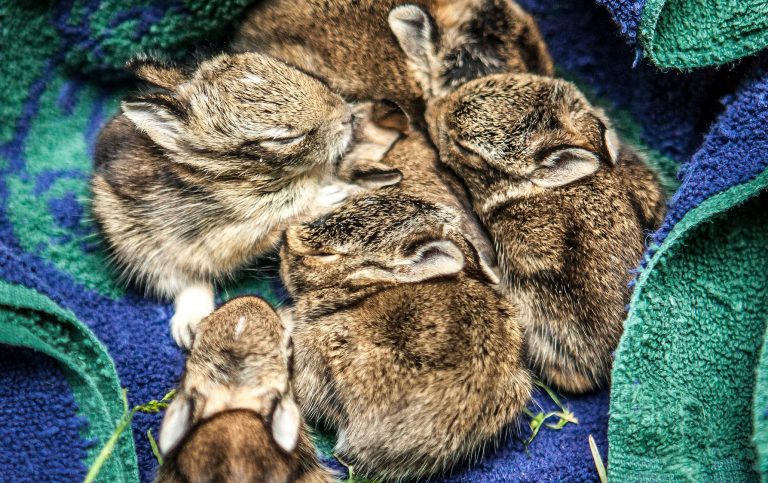
Rabbits with open eyes, erect ears, and that are at least 4 inches long are independent and do not need help. Mother rabbits visit their young only a few times a day, so an “empty” nest is not a cause for alarm.
If a nest has been disturbed, lightly cover it with surrounding natural material (grass, leaves, fur) and keep pets away. Place a loose pattern of yarn or sticks over the nest and check back in 24 hours — if it has been moved, mom has returned.
Call us if the nest remains undisturbed for 24 hours or if the babies appear injured.
Unlike some species, mother raccoons do not leave their young for long. If a baby raccoon has been alone for more than a few hours, they likely need help.
You can place an inverted laundry basket (with a light weight on top) over the baby to keep them contained and monitor into the nighttime hours — raccoons are nocturnal, so a mother should return after dark. Alternatively, place the baby in a pet carrier propped closed with a stick so the mother can push it open.
Call us if the mother has not returned by the following morning.
If a baby squirrel or nest has fallen from a tree and is in a safe location, give the mother time to retrieve it. Leave the area, keep pets away, and watch from a distance. If it is chilly outside or the baby is not yet fully furred, place them in a shoebox with a low-heat warming pad underneath, separated by a layer of cloth.
If the mother has not retrieved the baby by dusk, call us.
A squirrel that is nearly full-sized, has a full fluffy tail, and can run and climb is independent. However, if a juvenile squirrel is continuously approaching or following people, its mother is likely gone — call us.
Baby opossums ride on their mother’s back and can fall off without her noticing. As a general rule: if an opossum is over 7 inches long (not including the tail), it is old enough to be on its own. Under 7 inches, it needs care.
Call us if you find a small opossum under 7 inches that appears to be alone.
Skunks have poor eyesight. If something startles a mother skunk, her babies can quickly lose sight of her. If you see a line of baby skunks wandering without a mother, put on gloves and slowly place a laundry basket (without a weight) over them to keep them in one place while you wait for the mother to return.
Move slowly and speak softly — skunks warn before spraying by stamping their front feet. If the mother does not return by dawn, call us.
Fox kits are often left to play around their den for long stretches while the parents hunt. If they appear energetic and healthy, leave them alone. They will often disappear on their own once the parents decide they are old enough to join on hunting trips.
Call us if the kits appear weak or sickly, or if you have reason to believe both parents are dead.
Additional Resources
- Florida Fish & Wildlife Conservation Commission (FWC) Wildlife Alert Hotline: 1-888-404-3922 | myfwc.com
- The Ark Wildlife Rescue & Rehabilitation (birds only, NE Florida) 📞 904-679-1533 | thearkrescue.org
- Wildlife Rescue Coalition of Northeast Florida (mammals, turtles, tortoises) 📞 904-779-5569 | wildlifecoalition.com
- Find a licensed wildlife rehabilitator near you: humanesociety.org/resources/how-find-wildlife-rehabilitator