
The seasons are winter, spring, summer and fall, right? Beeeep … you forgot ‘Kitten season’
Written by Amy Carotenuto, the executive director of Flagler Humane Society.
Kitten Season is what those of us in animal welfare call the months when feline reproduction goes into overdrive, and kittens pour into shelters. Cat breeding is triggered by hormonal changes in response to the increase in daylight hours that begins in early spring. In most parts of the U.S., kitten season is between April and October, but in Florida’s warm, sunny climate, kitten season can last nearly all year.
A female kitten can come into heat and become pregnant as early as 5-6 months of age. Male kittens generally become fertile about the same time as well. In addition, an intact female cat can become pregnant with a new litter while she is still nursing and caring for her previous litter. She can have several litters in a year. Because female cats release multiple eggs and mate with various males during their heat cycle, each egg can be fertilized by a different tomcat. Good thing there’s not a feline version of the Maury Povich show…”You’re the father, and you’re the father, and you’re the father.”
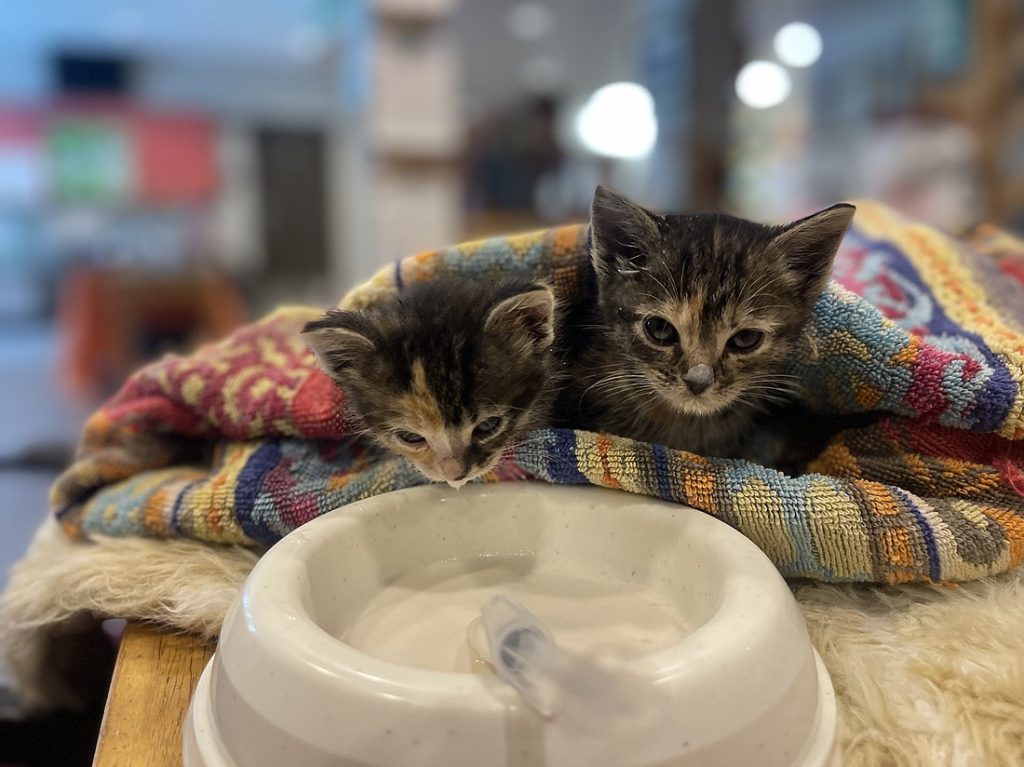
All in all, the cat’s reproductive cycle makes the species a pretty efficient breeding machine. Unfortunately, the more kittens that are born, the more of a massive influx of litters into shelters. Kittens are the most vulnerable population in animal shelters. They are fragile, arrive full of intestinal parasites, and are prone to respiratory and intestinal illnesses.
So what can you do to help?
Spay/neuter your own pets and help us spread the word of Flagler Humane Society’s low-cost and sometimes even free spay/neuter programs. Early spay/neuter, before an animal’s first heat cycle, provides benefits like faster recovery, reduced risk of mammary tumors and infections, and prevention of early pregnancy.
If you find a litter of kittens, they may have a mother nearby; it is usually best to leave them alone. It is extremely rare that a mother cat would abandon her babies. Observe from a distance for a few hours to see if the mother returns. She may be out searching for food. If the kittens appear sick, injured, or in immediate danger, intervene.
Before you take responsibility, though, realize that providing for tiny kittens can be a round-the-clock commitment. It requires dedication and knowledge. Kittens under 8 weeks old require special kitten milk replacement formula, as they are unable to digest cow’s milk. Tiny kittens must be fed and cared for around the clock. Kittens must be kept warm, as they cannot regulate their body temperature effectively. Caretakers must be vigilant that they have a warming plan that isn’t so hot as to burn kittens, though. After feeding, kittens must be cleaned, and the caretaker must imitate the mother’s grooming behavior to stimulate urination and bowel movements
Kittens need to be dewormed and vaccinated multiple times. With all this work comes the fun part — kitten socialization. Spending time loving on and playing with kittens is your reward for all those sleepless nights of bottle-feeding.
Shelters everywhere love volunteer foster families. Thank goodness for all of our foster parents and also our amazing program with the Flagler Sheriff’s Department, where females in their drug rehabilitation program care for kittens as a part of their program. It has been a win/win for everyone involved.
If you’re interested in fostering or adopting, please come see us. We’re open seven days a week until 5 p.m. and until 7 p.m. on Mondays and Fridays.